


About Us
Natanel (Nir) Saar, R.Ac, NLP Master Practitioner
Natanel believes that effective healing happens when the Acupuncture treatment is as gentle as it is effective.
Bringing 17 years of clinical experience to his practice, he specializes in a constitutional approach to acupuncture.
By combining precise assessment skills with ultra-fine needles, he is able to calms an overworked nervous system while targeting the root cause of pain and structural conditions.
He uses constitutional acupuncture to balance the internal organ systems and through that, establishing a grounded physical foundation for the body to be able to heal.
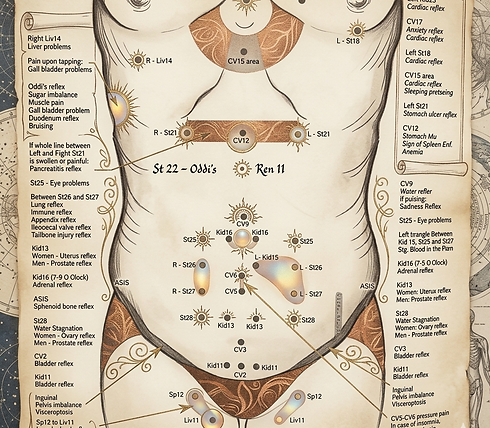
Japanese Acupuncture Reflex Map that can show us which bodily Internal Systems needs balancing
Insomnia
Is rarely an isolated symptom—it frequently stems from underlying physiological or psychological conditions. Addressing sleep issues effectively requires looking at both the root medical causes and how targeted treatments like acupuncture work to restore sleep quality.
Medical Conditions That Cause Insomnia
-
Chronic Pain Disorders: Conditions such as arthritis, fibromyalgia, lower back pain, and neuropathy make finding a comfortable position difficult and frequently wake sufferers throughout the night.
-
Hormonal & Endocrine Imbalances: Hyperthyroidism causes physical restless energy and tachycardia. Fluctuations during menopause (hot flashes and night sweats) directly interrupt sleep cycles.
-
Neurological & Movement Disorders: Restless Legs Syndrome (RLS) and periodic limb movement disorder create irresistible urges to move the legs, delaying sleep onset.
-
Psychiatric & Mood Disorders: Major depressive disorder, generalized anxiety, and PTSD are among the most prevalent drivers of primary and secondary insomnia due to hyperarousal of the central nervous system.
-
Gastrointestinal Issues: Gastroesophageal reflux disease (GERD) worsens when lying down, causing heartburn and micro-arousals during sleep.
-
Respiratory Conditions: Asthma and Chronic Obstructive Pulmonary Disease (COPD) impair nighttime breathing, while obstructive sleep apnea causes repeated oxygen drops and nocturnal awakenings.
How Acupuncture Helps Insomnia
Acupuncture addresses insomnia by regulating the body's autonomic nervous system and neurochemical feedback loops.
1. Parasympathetic Activation
Needle insertion at specific points triggers a shift from the sympathetic state ("fight or flight") to the parasympathetic state ("rest and digest"). Heart rate variability improves, muscular tension drops, and hyperarousal subsides.
2. Hormonal & Neurotransmitter Modulation
-
Melatonin Elevation: Clinical studies show that acupuncture stimulates the secretion of endogenous melatonin, helping reset altered circadian rhythms.
-
Cortisol Downregulation: By regulating the hypothalamic-pituitary-adrenal (HPA) axis, acupuncture lowers evening cortisol levels, preventing nighttime alertness.
-
GABA & Serotonin Balance: Treatment promotes the release of gamma-aminobutyric acid (GABA) and serotonin, neurotransmitters responsible for calming neural activity and facilitating slow-wave sleep.
3. Pain Reduction
By triggering the release of endorphins and reducing systemic inflammatory cytokines, acupuncture alleviates the physical discomfort that keeps pain patients awake.
4. Systemic Balancing (TCM Perspective)
In Traditional Chinese Medicine, insomnia is often diagnosed as an imbalance between the Heart and Kidney systems, or hyperactivity of Liver Yang disturbing the Shen (mind/spirit). Distal and local points—such as HT7 (Shenmen), SP6 (Sanyinjiao), GV20 (Baihui), and Anmian—are selected to nourish Yin, clear internal heat, and anchor the mind for restful sleep.
