


About Us
Natanel (Nir) Saar, R.Ac, NLP Master Practitioner
Natanel believes that effective healing happens when the Acupuncture treatment is as gentle as it is effective.
Bringing 17 years of clinical experience to his practice, he specializes in a constitutional approach to acupuncture.
By combining precise assessment skills with ultra-fine needles, he is able to calms an overworked nervous system while targeting the root cause of pain and structural conditions.
He uses constitutional acupuncture to balance the internal organ systems and through that, establishing a grounded physical foundation for the body to be able to heal.
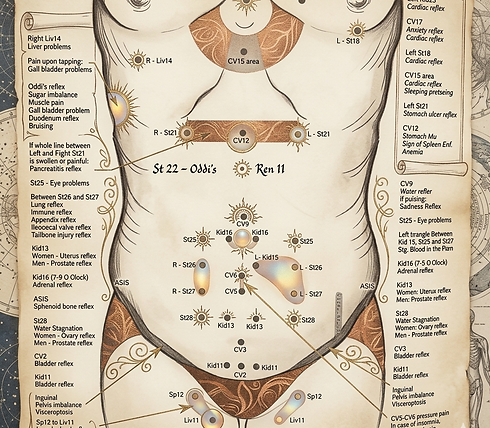
Japanese Acupuncture Reflex Map that can show us which bodily Internal Systems needs balancing
Common Medical Causes of Lower Back Pain
-
Mechanical & Soft Tissue Injuries
-
Structural & Disc Pathologies
-
Inflammatory & Systemic Conditions (Chronic issues affecting the joints and bones)
-
Underlying & Non-Spinal Causes (Referred pain originating outside the spine)
Important Note: Immediate medical care is required if lower back pain is accompanied by "red flag" symptoms such as loss of bowel/bladder control, numbness in the groin, progressive leg weakness, fever, or unexplained weight loss.
When is acupuncture effective?
1. Chronic, Non-Specific Lower Back Pain
Pain that has persisted for longer than 12 weeks. It is particularly effective for "non-specific" back pain, meaning the discomfort isn't tied to a clear structural abnormality (like a fracture or tumor) but rather stems from deep-seated muscular tension, poor posture, or nervous system sensitization.
2. Early Intervention for Acute Flare-Ups
Introducing acupuncture during an acute phase (the first few weeks of pain) can be highly effective. In these cases, it works by:
-
Interrupting pain signals: Stimulating specific points prompts the brain to release endorphins (the body's natural painkillers) and adenosine, which acts as a local anti-inflammatory.
-
Releasing muscle guarding: When the back is injured, surrounding muscles tightly constrict to "protect" the spine. Acupuncture helps reset these hypertonic muscles, improving local blood circulation to speed up tissue healing.
3. When Combined with Active Therapies
Acupuncture is most effective when used to reduce pain and inflammation so that a person can comfortably engage in:
-
Physical therapy or active rehabilitation
-
Core strengthening exercises
-
Daily stretching and mobility work
By lowering the baseline pain level, it opens a window of opportunity for patients to rebuild the structural support their lower back needs.
4. For Stress-Induced or Centralized Pain
When lower back pain is exacerbated by stress, anxiety, or poor sleep, acupuncture can be uniquely beneficial. Because it stimulates the Vagus nerve and helps shift the nervous system out of a sympathetic "fight-or-flight" state and into a parasympathetic "rest-and-digest" state, it helps lower systemic cortisol. This addresses the emotional and subconscious patterns that often amplify physical pain.
5. Consistently Scheduled Over a Treatment Course
A single session can provide temporary relief, but acupuncture's cumulative benefits are most apparent when a patient receives a consistent series of treatments—typically 1 to 2 times a week for 4 to 6 weeks. This cumulative approach helps retrain the nervous system and muscles to maintain a relaxed, balanced state.
Are you looking at acupuncture treatment for a recent back injury, or are you trying to manage a long-term condition of back pain?
We can Help
