


Find out what can lighten the load of your shoulder?
Acupuncture & NLP for Shoulder Pain


About Us
Natanel (Nir) Saar, R.Ac, NLP Master Practitioner
I believe that effective healing happens when acupuncture treatment is as gentle as it is effective.
With over 17 years of clinical experience, I specialize in a constitutional approach to acupuncture. By combining precise assessment with ultra-fine needles, I help calm an overworked nervous system while addressing the underlying causes of pain and structural conditions.
I use constitutional acupuncture to balance the body's internal organ systems, creating a grounded physical foundation that supports the body's natural ability to heal.
For clients seeking support beyond physical symptoms, I offer an integrated approach that combines acupuncture with Neuro-Linguistic Programming (NLP).
This allows me to address both the physical and emotional aspects of healing.
I provide a safe, compassionate, and non-judgmental space where clients can gently process emotional experiences, reframe limiting patterns, resolve long-standing emotional triggers, and develop greater resilience and balance.
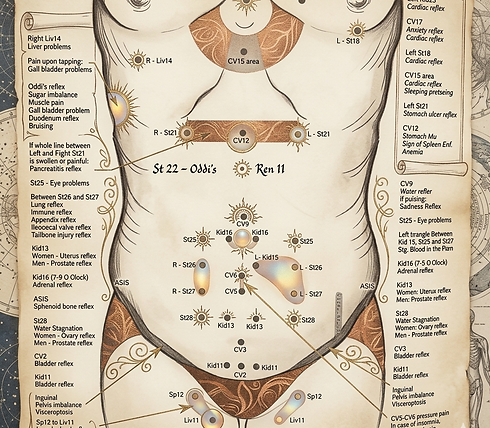
Japanese Acupuncture Reflex Map that can show us which bodily Internal Systems needs balancing
Common Medical Causes of Lower Back Pain
Common Medical Causes of Shoulder Pain
Shoulder pain can arise from the muscles, tendons, joints, nerves, or even be referred from other parts of the body. Identifying the underlying cause is essential for effective treatment.
Rotator Cuff Disorders
-
Tendinitis and tendinopathy
-
Rotator cuff tears
-
Shoulder impingement syndrome
Joint Conditions
-
Osteoarthritis
-
Rheumatoid arthritis
-
Acromioclavicular (AC) joint arthritis
-
Frozen shoulder (adhesive capsulitis)
Muscle & Soft Tissue Injuries
-
Muscle strains
-
Ligament sprains
-
Myofascial trigger points
-
Bursitis
Instability & Trauma
-
Shoulder dislocation or instability
-
Labral tears
-
Fractures following a fall or injury
Neck & Nerve Conditions
-
Cervical disc herniation
-
Cervical radiculopathy ("pinched nerve")
-
Thoracic outlet syndrome
Referred Pain
-
Sometimes the shoulder is not the source of the pain. Pain may originate from:
-
The neck
-
The diaphragm or gallbladder (especially the right shoulder)
-
The heart (particularly left shoulder pain associated with chest discomfort)
-
The lungs or upper abdomen
When to Seek Medical Assessment
Prompt medical evaluation is recommended if shoulder pain is accompanied by:
-
Severe trauma or deformity
-
Inability to lift or move the arm
-
Significant weakness or numbness
-
Fever, redness, or swelling
-
Chest pain, shortness of breath, or pain radiating to the jaw or left arm
How Acupuncture Can Help Shoulder Pain
Acupuncture can be an effective treatment for many types of shoulder pain by addressing both the local tissues and the nervous system. Treatment is tailored to the underlying cause, whether it involves muscles, tendons, joints, or referred pain from the neck.
From a Modern Medical Perspective
Acupuncture may help shoulder pain by:
-
Reducing Pain – Stimulating the release of the body's natural pain-relieving chemicals while reducing pain sensitivity.
-
Relaxing Tight Muscles – Releasing muscle tension and trigger points that restrict movement and contribute to pain.
-
Reducing Inflammation – Helping regulate inflammatory processes associated with tendon injuries, bursitis, and joint irritation.
-
Improving Blood Flow – Increasing local circulation to support tissue repair and healing.
-
Restoring Movement – Reducing pain and muscle guarding, allowing the shoulder to regain mobility and function.
-
Regulating the Nervous System – Calming an overactive nervous system, particularly when pain has become persistent or chronic.
From a Traditional Chinese Medicine Perspective
In Traditional Chinese Medicine (TCM), shoulder pain is viewed as a disruption in the flow of Qi and Blood through the meridians.
Treatment is individualized and may address patterns such as:
-
Qi and Blood Stagnation – Often associated with injury, chronic tension, or fixed pain.
-
Wind-Cold-Damp Bi Syndrome – Pain and stiffness aggravated by cold, damp weather, or inactivity.
-
Liver and Kidney Deficiency – Chronic weakness affecting the tendons, joints, and overall vitality.
Rather than treating the shoulder alone, acupuncture also addresses the underlying patterns that may contribute to recurring pain.
What Research Suggests
Clinical studies indicate that acupuncture can help reduce shoulder pain, improve range of motion, and enhance function in conditions such as:
-
Rotator cuff tendinopathy
-
Shoulder impingement syndrome
-
Frozen shoulder (adhesive capsulitis)
-
Myofascial shoulder pain
-
Neck-related shoulder pain
Acupuncture is often most effective when combined with appropriate movement, rehabilitation exercises, and lifestyle modifications to support long-term recovery.
Acupuncture & NLP Treatment Approach
Mind Body Connection
Can Stress and Emotions Contribute to Shoulder Pain?
Stress, anxiety, and unresolved emotional experiences can influence the nervous system, increasing muscle tension, altering posture, and making the body more sensitive to pain. Over time, these changes may contribute to shoulder pain or make an existing condition more persistent.
How Stress Affects the Body
When the nervous system perceives stress or threat, it naturally shifts into a protective state. This can lead to:
-
Tightness in the shoulders, neck, and jaw
-
Reduced mobility and muscle flexibility
-
Increased sensitivity to pain
-
Changes in breathing and posture
-
Slower recovery from injury
If this protective response becomes chronic, muscles may remain tense long after the original stressor has passed, contributing to pain, trigger points, and restricted movement.
An NLP Approach to Shoulder Pain
While shoulder pain often has a physical cause, emotional stress and unresolved life experiences can influence how the nervous system responds to pain. When the body remains in a prolonged state of stress, muscles tend to stay tense, pain sensitivity increases, and recovery may be slower.
NLP (Neuro-Linguistic Programming) offers a gentle way to explore the emotional and subconscious patterns that may be contributing to persistent pain.
How NLP Can Help
NLP can support shoulder pain by helping you:
-
Identify emotional stressors / events that may be contributing to muscle tension and pain
-
Track to see if there was an intense emotional event prior to when the pain started
-
Access information from the sub-conscious as for the reason behind the shoulder pain
-
Reduce chronic stress and calm the nervous system
-
Reframe unresolved emotional experiences that may be keeping the shoulder / body in a protective state
An Integrated Approach
NLP can help explore the deeper factors that may be contributing to persistent pain or reducing the body's capacity to heal.
For some people, unresolved emotional experiences, chronic stress, or subconscious patterns can keep the nervous system in a protective state, making recovery more difficult.
These patterns may relate directly to the onset of shoulder pain or reflect broader life experiences that continue to influence overall health and well-being.
Through NLP and Guided Imagery, we gently identify and reframe these patterns, helping to regulate the nervous system, build emotional resilience, and create a more supportive environment for healing.
By combining NLP with acupuncture, we address both the physical and emotional aspects of shoulder pain.
Acupuncture helps regulate the nervous system and reduce muscle tension, while NLP supports emotional resilience and nervous system regulation—creating an environment where healing can occur more naturally.
This integrated approach is particularly valuable when shoulder pain is influenced by chronic stress, emotional overwhelm, trauma, or when symptoms persist despite previous treatment.
Call or text to book your free
15-minute consultation.
778.594.1066
